Emergency Plumbing in Kahibah
Toilet Overflowing in Kahibah
An overflowing toilet is the plumbing fault you cannot put in the too-hard basket. Water on the bathroom floor moves fast, and Kahibah homes give it somewhere to go: timber floors, carpet edges, and floorboards in the older cottages that hold moisture long after the puddle is gone.
This page covers why it happens, what you can safely check, and what we do when you ring.
What "Overflowing" Actually Means
Toilets overflow in two very different ways, and telling them apart saves time on the phone.
A blocked pan
A backed-up line
The giveaway is the other fixtures. If the shower gully gurgles or the basin drains slowly at the same time, the fault is downstream. If everything else runs free, the blockage is local to the pan.
Both count as emergencies in our book. Either way you have water rising where clean water should be, and the longer it sits, the bigger the clean-up.
Likely Causes, in Order of Cost
Most overflow callouts here come down to a short list, and the fix gets dearer as you go down it. Start at the top.
A blocked pan or trap
A blocked drain under the floor
Tree roots in the sewer
Displaced or fractured clay joints
Storm surcharge from outside
The last two matter more here than in newer suburbs. Much of the private drainage in the older streets predates plastic pipe entirely, so the causes are older and the failures are slower to announce themselves.
What You Can Safely Check
You can do three useful things before we arrive, and none of them involve a coat hanger or a bottle of caustic anything.
- 1
Stop using water in the house
Every flush, shower and load of dishes ends up in the same line. Give the system nothing extra until we get there.
- 2
Turn off the cistern tap if there is one
Most toilets have a small isolating tap near the base. Close it gently and the pan stops refilling on its own.
- 3
Lift the lid off the cistern and hold the float up
If there is no isolating tap, raising the float stops the refill. The pan will not flush again while you hold it, which is exactly what you want.
Leave the clearing to us. Wire hangers scratch the pan's glaze, chemical drain products generate heat against a blockage and can crack an old clay joint, and a plunger used hard on a surcharged sewer pushes sewage back into the gullies you are standing next to.
Do not wait on this
When to Ring Instead of Waiting
Ring straight away if any of these describe your situation:
- Water is still rising, or has reached the floor waste or overflow gully.
- More than one fixture is backing up together.
- The overflow started during heavy rain and will not settle.
Rain changes the timing. Summer cells stalling over the coastal escarpment can drop intense rain into this small valley faster than the channels toward the lagoon can carry it, so a toilet that backs up in a downpour may be part of that storm pattern rather than a pan problem at all.
We can tell you over the phone whether to wait out the storm or book regardless.
If the toilet only misbehaves every few weeks, that is still worth a booking, just not a midnight one. A line that blocks twice a season has a cause, and the blocked drains page explains how we find it.
What We Do on the Job
Step 1 and step 2 are the same on every emergency booking: ring (02) 4063 3446 and tell us what is going on so the right gear is on the truck, and you get the price before anything starts. No call-out fee, and you approve the quote or we leave, no charge.
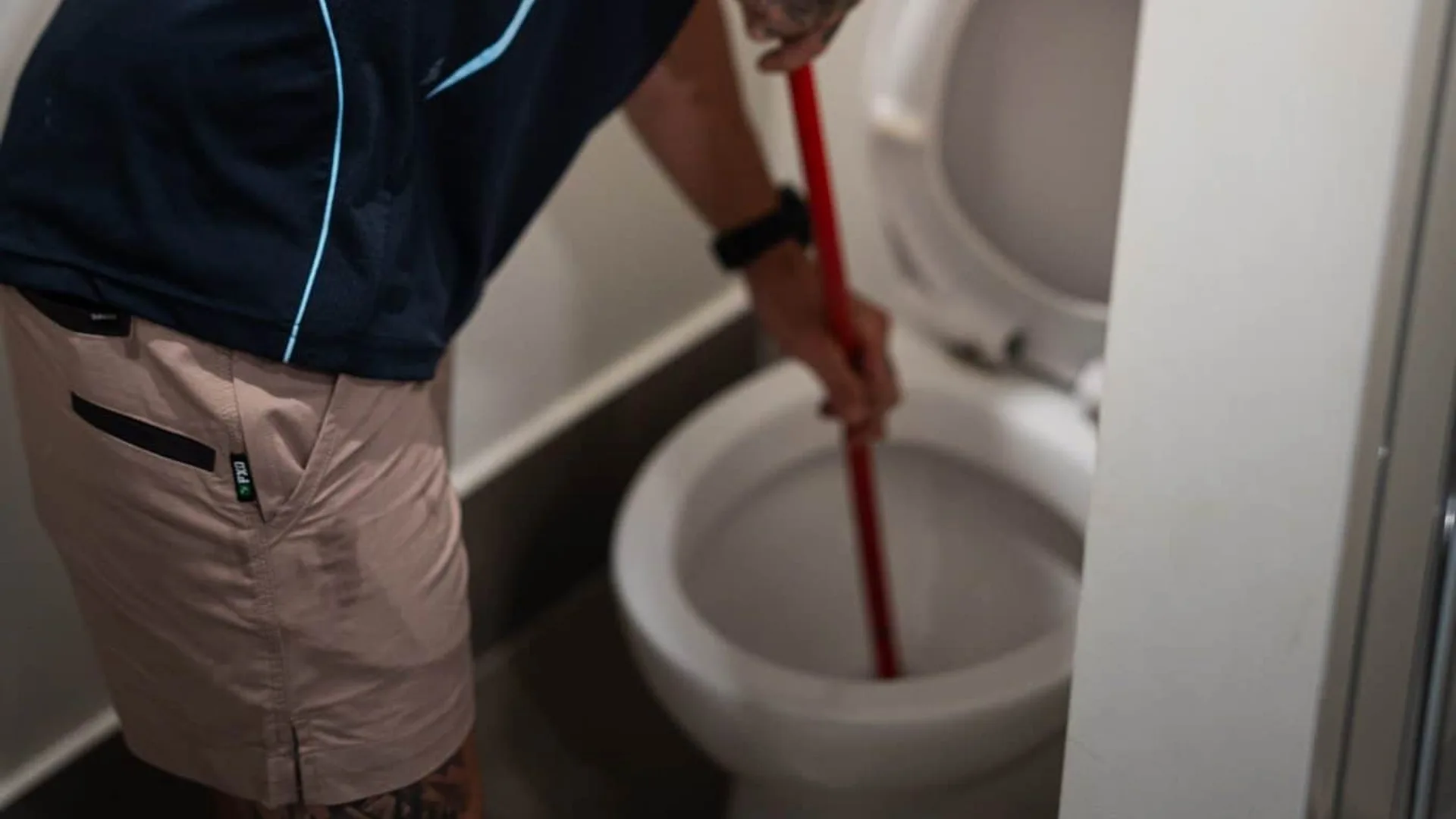
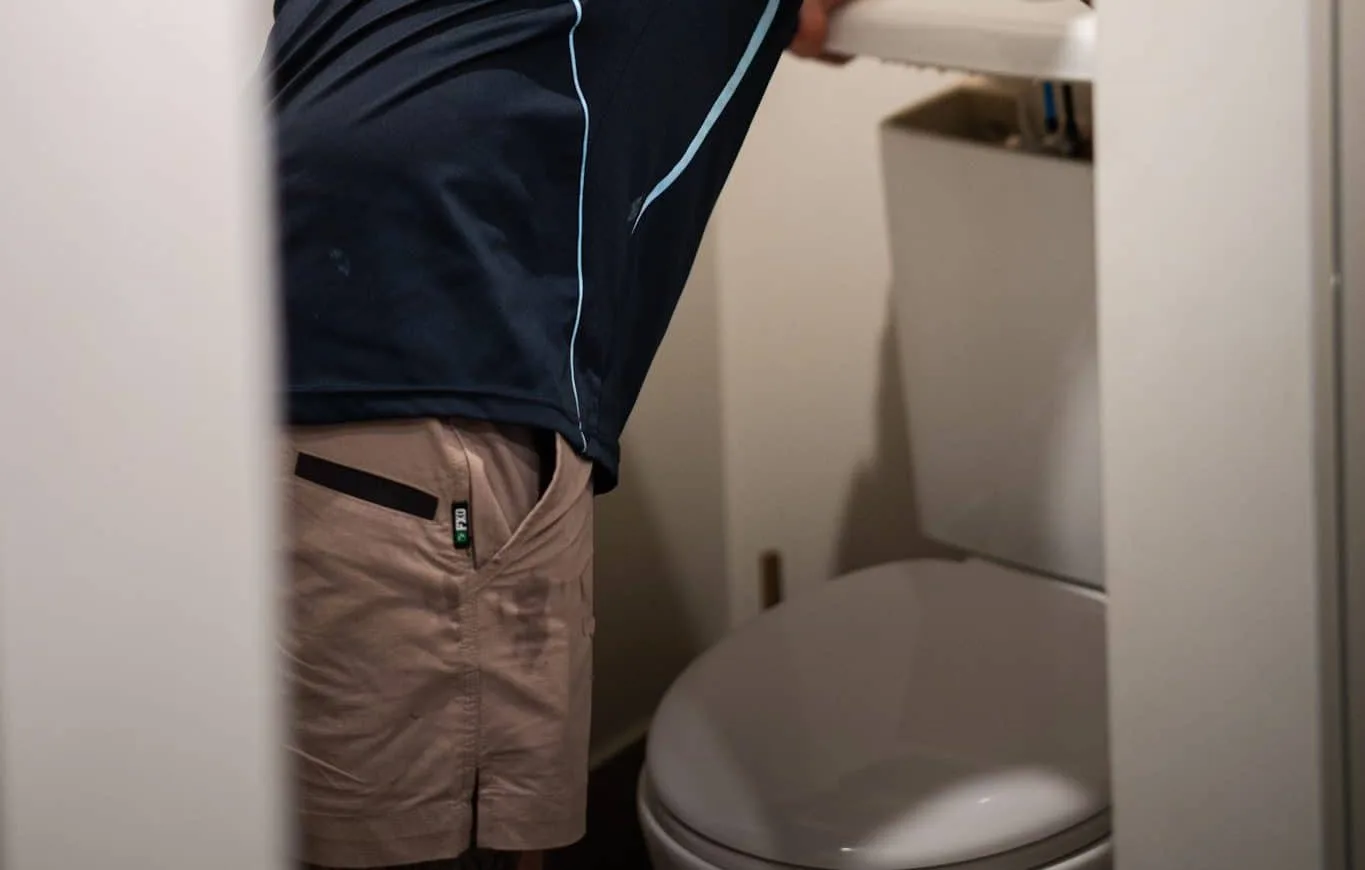
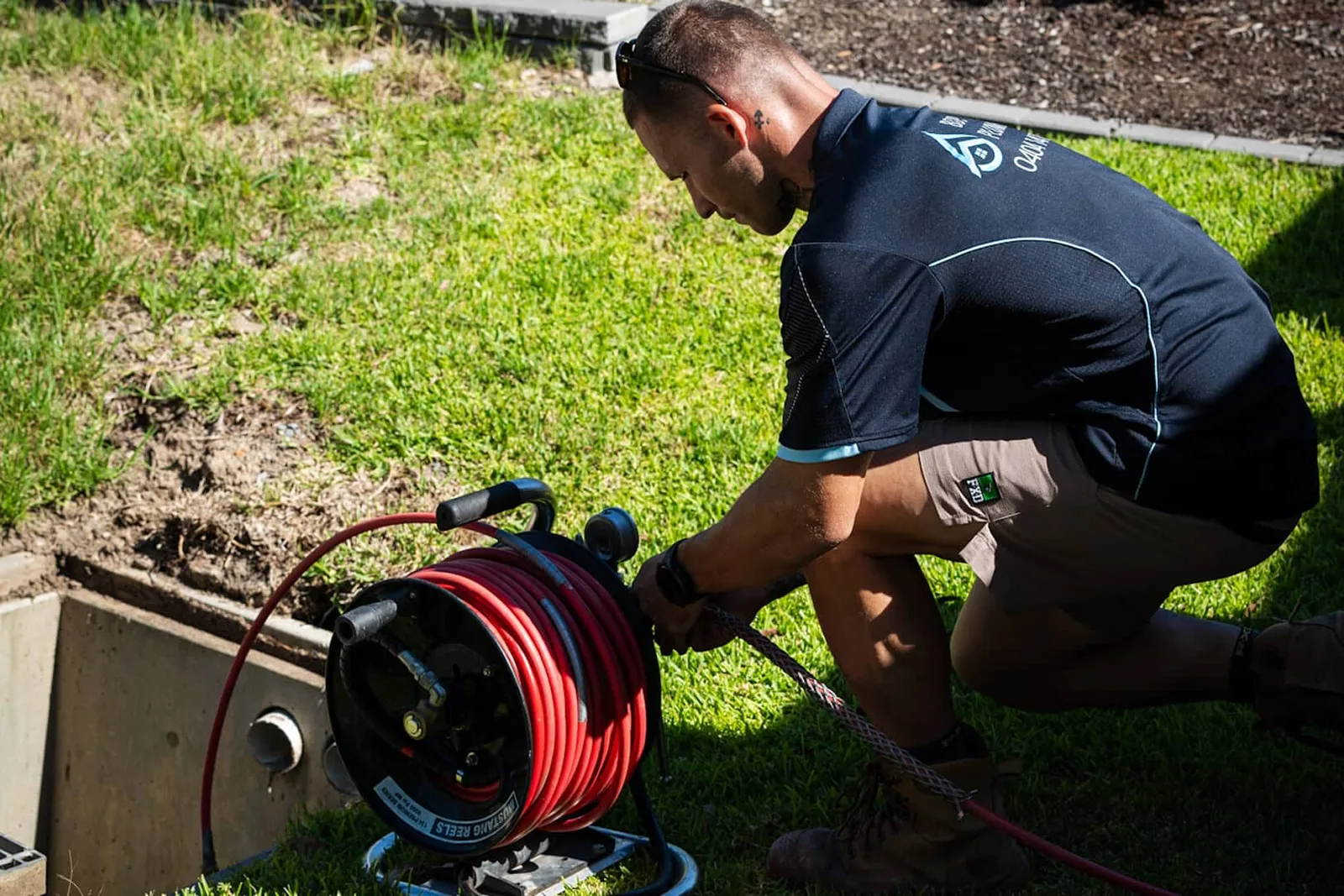
Step 3 for an overflowing toilet. We isolate the pan, clear the blockage from the nearest access point, and if the line has blocked before, put a camera down it so the cause is confirmed rather than guessed.
That camera step is where local knowledge earns its keep.
- Displaced clay joints on the way to the main are a regular find in the older streets, and knowing the pipe is glazed earthenware rather than PVC changes what we clear it with and how hard we push.
- Roots get cut and the joint gets flagged for repair. A soft blockage gets jetted and you are done.
If the camera shows a cracked or offset line, you get the options in writing rather than a surprise on the invoice. That might be a spot repair where the pipe allows it, or a planned replacement where a section is failing. Most of that follow-up runs through our drainage team, and the CCTV drain inspections page covers how the diagnosis works.
Step 4 is the standard every job is held to: if something isn't up to standard afterwards, we come back and make it right, no questions asked.
Clearing Up After the Water
The plumber leaves, and you are standing on a wet floor. A few practical notes:
- Blot, do not sweep. Pushing water toward floor wastes on old timber can drive it between the boards.
- Run fans and open windows. The valley holds moisture in summer, and a bathroom that stays damp grows problems of its own.
- Keep an eye on the ceiling below if the bathroom is upstairs, and on the wall on the other side of the toilet. Slow water travel shows up as a stain days later.
If the overflow soaked carpet or plaster, the plumbing fix and the clean-up are separate jobs, but we will tell you honestly what was water damage and what was just water.
Overflowing Toilet Questions People Ask
Should I keep flushing to try to clear the blockage?
No. Every extra flush adds water the drain cannot take, and here the next stop is often a floor waste or the shower. One flush to confirm, then call.
Could the problem be the sewer rather than the toilet itself?
Often, yes. The oldest streets here run glazed clay lines from the township era, and displaced joints or tree roots usually block the sewer rather than the pan.
The water rose while it was raining. Is that still my drain?
Not necessarily. Heavy rain heading for Flaggy Creek can surcharge the sewer and push water back through the lowest fixture. That is a storm pattern, not a pan fault.
Will you need to dig up my bathroom floor?
Rarely on the first visit. We clear from the boundary or an inspection opening first, and excavation only comes up if the camera finds a broken pipe you approve.
Can you come out after hours and on weekends?
Urgent calls are handled outside standard hours where the schedule allows. Ring (02) 4063 3446 with what is happening and you get a straight answer on timing and price first.
What does it cost to have an overflowing toilet looked at?
The call out is $0 and the quote comes before any work. A simple pan clear is a small job; the quote covers a bigger repair in writing first.
Where This Fits With the Rest of the Site
An overflow is one symptom on the urgent list. Three other pages sit alongside it:
Plumbers in Kahibah and the suburbs around it